ResearchTuesday, March 17, 2026

AI-Powered B2B Chemical Trading Platform: India's $180B Opportunity

India’s chemical industry is the 6th largest globally, worth $180B+. Yet 80% of transactions still happen via phone calls, WhatsApp, and manual negotiation. This fragmentation creates a massive opportunity for an AI-first B2B chemical marketplace.

1.

Executive Summary

The Indian chemical industry is experiencing unprecedented growth, driven by pharmaceutical exports, specialty chemicals, and agrochemical demand. However, the B2B trading layer remains archaic—dominated by intermediaries, opaque pricing, and manual workflows.

An AI-powered chemical trading platform can capture this fragmented market by:

  • Automating supplier discovery and verification
  • Enabling transparent price discovery
  • Handling compliance (REACH, ISO, GST) automatically
  • Matching buyers with verified sellers via AI agents
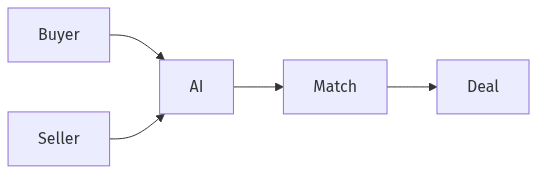
Target: $2-5B transaction volume in 3 years


2.

Problem Statement

The Pain Points

1. Fragmented Supplier Base
  • 10,000+ chemical manufacturers in India
  • Most are small-to-mid sized (Tier 2/3 cities)
  • No centralized discovery platform
2. Trust Deficit
  • Quality consistency is a major issue
  • No standardized verification system
  • Buyers must physically visit factories or rely on intermediaries
3. Opaque Pricing
  • No published price lists
  • Every transaction is negotiated
  • Price varies based on relationship, quantity, payment terms
4. Compliance Complexity
  • Hazardous chemical regulations
  • GST variations (0%, 5%, 12%, 18% depending on chemical type)
  • Export compliance (REACH for EU, TSCA for US)
5. Logistics Challenges
  • Dangerous goods handling
  • Multiple warehouse hubs needed
  • Last-mile complexity

Who Experiences This Pain?

  • Small formulation companies (paints, adhesives, inks) struggling to find reliable suppliers
  • Pharmaceutical intermediates buyers needing verified quality
  • Exporters navigating complex compliance
  • Importers looking for domestic alternatives

3.

Current Solutions

CompanyWhat They DoWhy They're Not Solving It
ChemAnalystPrice tracking, market reportsData only, no transactions
IndiaChemDirectory of chemical companiesStatic listings, no AI matching
ChemConnectB2B chemical marketplaceGlobal focus, weak India coverage
Mysore ChemicalsLegacy manufacturerSingle supplier, no platform

Market Gaps

  • No AI-native chemical marketplace in India
  • No automated compliance checking for transactions
  • No quality verification layer
  • No real-time inventory from multiple suppliers

  • 4.

    Market Opportunity

    Market Size

    SegmentIndia SizeGlobal Size
    Basic Chemicals$45B$650B
    Specialty Chemicals$35B$250B
    Agrochemicals$12B$70B
    Pharmaceuticals (API)$18B$200B
    Total Addressable$180B+$1.5T

    Growth Drivers

    • Pharma exports: India is 3rd largest globally, growing 15%+ annually
    • Specialty chemicals shift: Moving from commodity to high-value specialty
    • China+1 strategy: Global buyers diversifying from China
    • Domestic consumption: Paints, adhesives, textiles growing 12% CAGR

    Why Now

  • Digital adoption accelerated post-COVID
  • UPI for B2B: Payment infrastructure maturing
  • AI capabilities: Can now handle complex chemical specifications
  • Trust infrastructure: E-sign, digital verification available

  • 5.

    Gaps in the Market

    Using ANOMALY HUNTING

    Anomaly 1: "Why is there no Amazon for chemicals in India?"
    • Alibaba focuses on cross-border, not domestic
    • India-specific chemical search is poor
    • No platform has achieved critical mass
    Anomaly 2: "Why do prices vary 30% for the same chemical?"
    • No standardized pricing engine
    • Relationship-driven, not efficiency-driven
    • AI can normalize based on specifications, quantity, logistics
    Anomaly 3: "Why is quality verification manual?"
    • No automated QC matching
    • Physical inspection still dominant
    • AI vision + IoT sensors can automate this

    Specific Gaps

  • Specification matching: Buyers describe requirements in plain language; AI can match to CAS numbers and technical specs
  • Multi-supplier aggregation: No one platform shows inventory from multiple small manufacturers
  • Automated compliance docs: Generate MSDS, COA automatically
  • Credit assessment: SME chemical suppliers have no credit history online

  • 6.

    AI Disruption Angle

    How AI Agents Transform Chemical Trading

    Current State:
    Buyer → Google search → Call 5 suppliers → Negotiate → Manual order → Phone follow-up
    Future State:
    Buyer: "I need 500kg Sodium Hydroxide flakes, 98% purity, delivered to Mumbai in 7 days"
    AI Agent: [Searches inventory across 200 suppliers] → [Verifies compliance] → [Checks logistics] → 
    [Presents 3 options with pricing] → [Executes order on approval]

    AI Capabilities Applied

    CapabilityApplication
    NLPConvert plain language to chemical specs (CAS numbers)
    Computer VisionVerify container labels, QC certificates
    Knowledge GraphMap supplier capabilities, certifications, past performance
    PredictionPrice forecasting, demand sensing
    AutomationOrder execution, compliance doc generation

    The AI Agent Workflow

    AI Chemical Trading Architecture
    AI Chemical Trading Architecture
  • Intent Capture: Buyer inputs requirements via chat/voice
  • Specification Mapping: AI converts to CAS number + technical specs
  • Supplier Matching: Query verified supplier database
  • Compliance Check: Auto-verify licenses, hazardous material permits
  • Price Optimization: Factor in quantity, logistics, payment terms
  • Order Execution: Auto-generate PO, track fulfillment

  • 7.

    Product Concept

    Platform Name (Working Title)

    ChemAgent or ChemConnect.ai

    Core Features

    For Buyers:
    • Natural language chemical search
    • Multi-supplier comparison
    • Automated RFQ (Request for Quote)
    • Order tracking with IoT integration
    • Quality dispute resolution
    For Sellers:
    • Inventory management dashboard
    • AI-powered pricing recommendations
    • Credit assessment tools
    • Logistics coordination
    • Compliance document generation
    For Both:
    • Verified profiles (KYC, ISO, factory inspection)
    • Escrow payments
    • AI dispute resolution

    Key Differentiators

  • Chemical-specific AI: Not generic B2B—understands molecular specs, hazards, regulations
  • Hybrid inventory: Aggregates from small manufacturers who can't build their own digital presence
  • Compliance-as-a-service: Handles the regulatory complexity that scares away small players

  • 8.

    Development Plan

    Phase 1: MVP (12 weeks)

    FeatureTimeline
    Chemical database (10,000+ SKUs)Weeks 1-4
    Supplier onboarding flowWeeks 3-6
    Basic search & matchWeeks 5-8
    Quote request systemWeeks 8-10
    Simple payments (escrow)Weeks 10-12

    Phase 2: V1 (12 weeks)

    FeatureTimeline
    AI specification mappingWeeks 1-4
    Automated compliance docsWeeks 3-6
    Logistics integrationWeeks 5-8
    Quality verification layerWeeks 7-10
    Mobile appWeeks 8-12

    Phase 3: Scale (16 weeks)

    FeatureTimeline
    AI agent for auto-orderingWeeks 1-6
    Credit scoring for suppliersWeeks 4-10
    Predictive pricingWeeks 8-14
    Multi-region expansionWeeks 12-16
    ---
    9.

    Go-To-Market Strategy

    Step 1: Cluster Focus (Month 1-3)

    Target: Gujarat chemical clusters (Vapi, Ankleshwar, Bharuch)
    • 500+ chemical manufacturers
    • Existing industry networks
    • Easy to physically verify

    Step 2: Digital First (Month 3-6)

    • LinkedIn ads targeting procurement managers
    • Industry publication partnerships (Chemical Weekly, Indian Chemical News)
    • Webinar series on "Digital Procurement in Chemicals"

    Step 3: Network Effects (Month 6-12)

    • Incentivize buyers to bring suppliers
    • Each new buyer unlocks 3-5 suppliers
    • Referral program with volume discounts

    Step 4: National Scale (Year 2)

    • Expand to Maharashtra, Tamil Nadu, West Bengal clusters
    • Add specialty chemical categories
    • Enable export transactions

    10.

    Revenue Model

    Primary Revenue Streams

    StreamDescriptionTake Rate
    Transaction FeeCommission on completed orders2-5%
    SubscriptionPremium features for frequent buyers₹5,000-50,000/mo
    Listing FeeFeatured supplier listings₹10,000-1L/mo
    Data ServicesMarket intelligence reports₹25,000-2L/report
    Logistics MarkupCoordinated shippingCost + 10%

    Revenue Projection (Conservative)

    YearGMVRevenue
    1₹50 Cr₹2 Cr
    2₹200 Cr₹10 Cr
    3₹500 Cr₹30 Cr
    ---
    11.

    Data Moat Potential

    Proprietary Data Assets

  • Supplier Capability Database
  • - Production capacity, certifications, quality history - Hard to replicate—requires manual verification + AI
  • Price Index
  • - Real transaction prices (not just listed) - Becomes the industry reference rate
  • Quality Metrics
  • - Post-transaction ratings - QC failure rates by supplier - New entrants can't fake this data
  • Buyer Behavior
  • - Specification preferences - Price sensitivity patterns - Enables predictive pricing

    Defensible Moat

    • Network effects: More buyers attract more sellers
    • Data flywheel: More transactions → better AI → more efficiency
    • Verification cost: Physical verification is expensive; platform amortizes it

    12.

    Why This Fits AIM Ecosystem

    Vertical Integration Opportunity

    This platform can become a key vertical under AIM.in:

  • Domain alignment: AIM.in focuses on B2B discovery
  • Data synergy: Leverages existing WHOIS/domain intelligence
  • Traffic advantage: AIM network drives initial supplier discovery
  • Agent integration: Matsya (Netrika) can continuously improve matching algorithms
  • Long-term Vision

    • Year 1: India-focused chemical marketplace
    • Year 3: Multi-category (polymers, solvents, additives)
    • Year 5: Cross-border trading hub (India ↔ China, SE Asia, EU)

    13.

    Pre-Mortem: Why Might This Fail?

    FALSIFICATION ANALYSIS

    Assumption: "AI can automate chemical specification matching" Why it might fail:
    • Chemical specifications are highly technical
    • Small manufacturers may not have digitized specs
    • Quality verification requires physical inspection
    Mitigation:
    • Hybrid approach: AI-assisted, human-verified for critical transactions
    • Start with high-standardization categories (industrial chemicals, solvents)
    Assumption: "Suppliers will come online easily" Why it might fail:
    • Many small manufacturers are technophobic
    • Trust is built on personal relationships
    • Commission expectations are low (margins are thin)
    Mitigation:
    • Free onboarding for first 100 suppliers
    • Demonstrate value with buyer demand

    Steelmanning: Why Incumbents Might Win

  • Existing relationships: Old traders have decades of trust
  • Credit access: Traditional channels provide credit; platform would need to fund this
  • Complex transactions: Large orders still need human negotiation
  • Regulatory capture: Established players may influence policy

  • ## Verdict

    Opportunity Score: 8/10

    Rationale

    Strengths:
    • Massive TAM ($180B India)
    • Clear pain points (fragmentation, trust, pricing)
    • AI can genuinely solve hard matching problems
    • First-mover advantage in India-specific market
    Challenges:
    • Physical verification is expensive
    • Margins are thin; need volume
    • Regulatory complexity is high
    • Trust-building takes time
    Recommendation: This is a high-potential opportunity if approached with:
  • Cluster strategy (not pan-India initially)
  • Hybrid AI+human verification
  • Patient capital (long sales cycles)
  • Focus on high-standardization categories first
  • The chemical industry is too large and too fragmented to remain offline forever. An AI-first approach can capture significant value by reducing search costs, enabling transparent pricing, and automating compliance.


    ## Sources