ResearchFriday, March 13, 2026

AI-Powered B2B Laboratory Equipment Calibration Marketplace: The $12B碎片化机会

1.

Executive Summary

Laboratory equipment calibration is a $12 billion global market characterized by extreme fragmentation. When a hospital's blood analyzer needs calibration, the biomedical engineering team must identify certified vendors, compare quotes, schedule service, and manually track compliance documentation — a process that takes 2-4 weeks for routine calibrations and much longer for specialized equipment.

The core insight: Equipment-calibration matching is fundamentally a structured data problem. AI can parse equipment specifications, match them to vendor certifications, verify regulatory compliance, and schedule services — work that takes procurement teams days or weeks. Why now:
  • Vision-language models can read equipment nameplates and serial numbers from photos
  • Embedding models understand equipment-certification relationships semantically
  • Agent architectures can coordinate multi-vendor scheduling
  • Regulatory pressure (NABH, NABL, FDA) is increasing compliance requirements
  • India's diagnostic market is growing 20%+ annually
This analysis applies Zeroth Principles questioning, Incentive Mapping of the vendor ecosystem, Distant Domain Import from gig economy platforms, and Pre-Mortem stress testing.
2.

Problem Statement

Who Experiences This Pain?

Biomedical Engineers / Lab Managers
  • Manage 50-500+ pieces of equipment requiring calibration
  • Must verify vendor certifications for each equipment type
  • Track compliance deadlines across multiple regulatory frameworks
  • Spend 30%+ of time on administrative tasks, not technical work
Hospital Procurement
  • No standardized way to evaluate calibration vendors
  • Cannot verify if vendor is certified for specific equipment
  • Limited visibility into pricing across vendors
  • Fear: Non-compliant calibration = regulatory violations + patient safety risks
Diagnostic Lab Owners
  • NABL accreditation requires documented calibration records
  • Multiple equipment types = multiple vendor relationships
  • Manual tracking leads to missed deadlines and accreditation risks
  • Fear: Failed audit = loss of accreditation = business closure

The Actual Workflow (Observed)

  • Equipment due for calibration → Lab manager checks spreadsheet
  • Identify equipment specs → Search manuals, check nameplates
  • Find vendors → Ask peers for recommendations, search Google
  • Verify certifications → Call vendor, ask if certified for this equipment
  • Request quotes → Email/WhatsApp details, wait for responses
  • Compare and select → Manual comparison of pricing, availability
  • Schedule service → Coordinate with vendor and lab schedule
  • Service completion → Receive paper certificate, scan, file
  • Track next due date → Add to spreadsheet, hope nothing is missed
  • Average time per calibration cycle: 2-4 weeks of administrative work Time it should take: 5-15 minutes with AI assistance
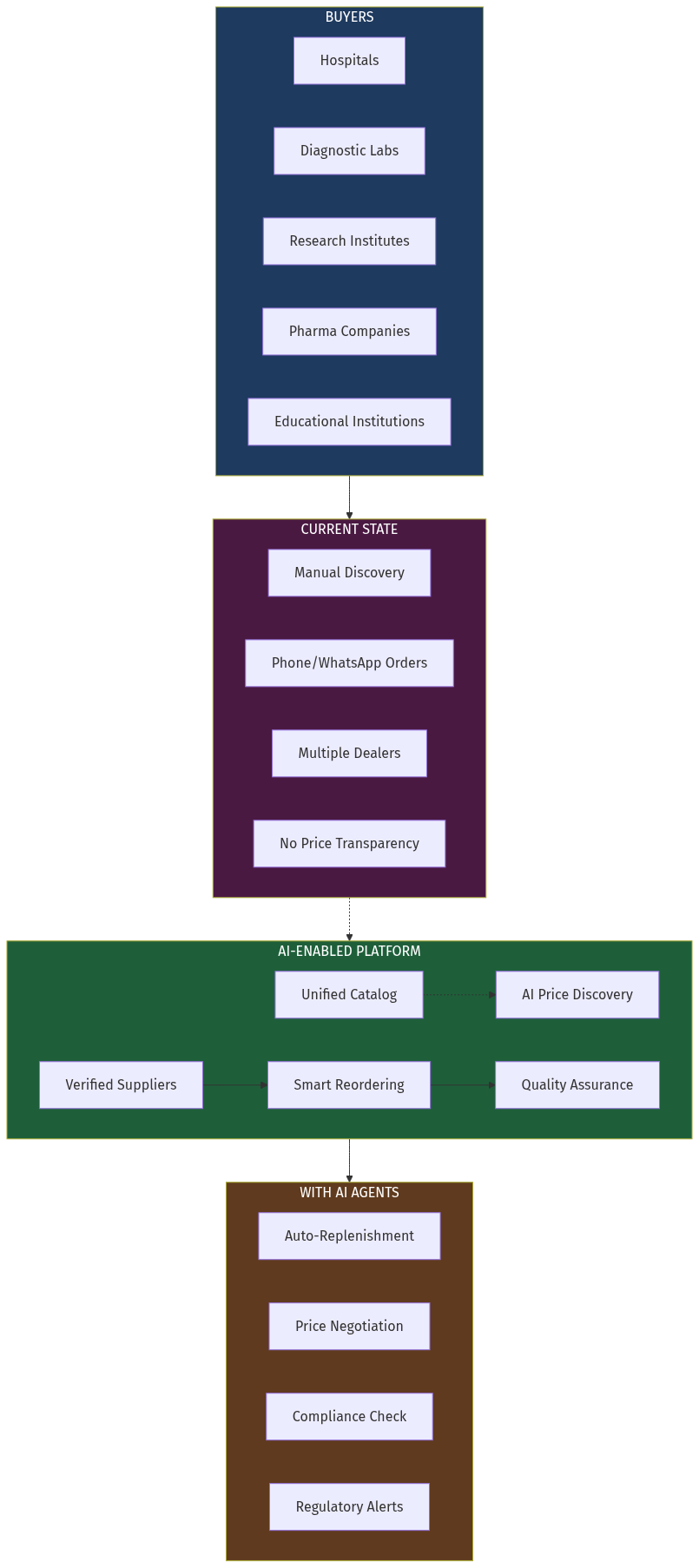
    Current vs Future Workflow
    Current vs Future Workflow

    3.

    Current Solutions

    CompanyWhat They DoWhy They're Not Solving It
    SartoriusLab equipment + calibration servicesOnly their own equipment, not a marketplace
    Thermo FisherScientific equipment + servicesEnterprise-focused, limited SMB access
    EurocalUK calibration servicesGeographic limitation, manual booking
    TranscatUS calibration servicesUS-centric, enterprise focus
    Nablac (India)NABL consultantConsulting only, not marketplace
    Local service providersIndividual techniciansNo online presence, verification challenges

    Applying Zeroth Principles: What Are We Actually Solving?

    Strip away assumptions:
    • Assumption 1: "Only OEM can calibrate their equipment" → False. Most equipment can be calibrated by third-party certified providers at 40-60% cost.
    • Assumption 2: "Certification is a binary yes/no" → False. Different certifications for different equipment types, overlapping scopes.
    • Assumption 3: "Calibration is a one-time event" → False. Most equipment requires annual, quarterly, or monthly calibration depending on type and usage.
    Zeroth-level truth: The buyer needs compliance documentation for specific equipment within specific timeframe. The service itself is secondary — what they need is proof.
    4.

    Market Opportunity

    Market Size

    SegmentIndia Market SizeGlobal Market SizeNotes
    Diagnostic Labs$8B$120B100K+ labs in India, growing 20%/year
    Hospital Equipment$15B$200B70K+ hospitals, increasing compliance focus
    Pharma/R&D Labs$5B$80BStringent regulatory requirements
    Calibration Services$1.2B (India)$12B (global)Highly fragmented

    Why Now - The Convergence

  • Regulatory pressure — NABL (India) and NABH accreditation requirements are increasing. Labs must show documented calibration records for every piece of equipment.
  • Diagnostic boom — India's diagnostic market expected to reach $20B by 2027. New labs opening need vendor networks.
  • AI capability leap — Vision models can now read equipment nameplates, embedding models understand certification requirements, agents can coordinate multi-party workflows.
  • Supply-demand mismatch — Thousands of small calibration providers have no online presence. Buyers have no efficient way to find them.
  • India-Specific Opportunity

    • 100,000+ diagnostic labs (largest in world)
    • NABL accreditation required for 70%+ of lab tests
    • Most calibration done by 5-10 person companies with no digital presence
    • WhatsApp-first communication for 90%+ of vendor interactions

    5.

    Gaps in the Market

    Gap 1: No Central Vendor Registry

    Problem: Buyers cannot verify vendor certifications at scale. Why it exists: Each certification body (NABL, ISO, OEM) maintains separate records. AI solution: Build unified certification database with AI-verified credentials.

    Gap 2: No Equipment-Vendor Matching

    Problem: Matching equipment type to certified vendor requires domain expertise. Why it exists: Certification scopes are complex, equipment taxonomies are inconsistent. AI solution: Embedding-based matching from equipment specs to certification scopes.

    Gap 3: Manual Compliance Tracking

    Problem: Each piece of equipment has different calibration frequency. Why it exists: No standardized taxonomy, regulatory requirements vary by equipment type. AI solution: Automated compliance calendar with predictive alerts.

    Gap 4: Fragmented Pricing

    Problem: No standard pricing benchmarks for calibration services. Why it exists: Local market pricing, equipment-specific complexity, no transparency. AI solution: AI-estimated pricing based on equipment type, location, complexity.

    Gap 5: No Quality Verification

    Problem: Buyers cannot verify service quality before hiring. Why it exists: No standardized ratings, most vendors are unknown to new buyers. AI solution: AI-verified completion records, compliance documentation verification.
    6.

    AI Disruption Angle

    How AI Agents Transform the Workflow

    Current State:
    Equipment breakdown → Manual search → Phone calls → Quote comparison → 
    Scheduling → Paper certificate → Manual filing → Hope nothing expires
    Future State with AI Agents:
    Photo of equipment → AI identifies + matches to certified vendors → 
    Auto-schedules at optimal time → Digital certificate generated → 
    Auto-updated compliance dashboard → Proactive alerts for next cycle

    Key AI Capabilities

    CapabilityHow It Helps
    Vision AIRead equipment nameplates, serial numbers from photos
    Semantic SearchMatch equipment type to certification requirements
    Multi-agent CoordinationSchedule between buyer availability and vendor capacity
    Document GenerationAuto-create calibration certificates in required format
    Predictive AlertsML model predicts equipment likely to need calibration soon

    Distant Domain Import: What Can We Learn?

    From Uber/DoorDash:
    • Real-time matching between service request and provider availability
    • Rating/reputation system that builds trust over time
    • Dynamic pricing based on demand/supply
    From Upwork/Fiverr:
    • Profile-based matching between skill requirements and vendor capabilities
    • Milestone-based payment on service completion
    • Portfolio展示 of past work
    From Amazon:
    • Inventory-like view of service availability
    • Review and rating system
    • One-click re-order for recurring services

    7.

    Product Concept

    Core Platform Features

    For Buyers (Labs/Hospitals):
  • Equipment Inventory Manager — Upload equipment list, AI parses specs, auto-categorizes
  • Vendor Marketplace — Browse certified vendors by equipment type, location, rating
  • Smart Scheduling — AI suggests optimal times based on vendor availability + equipment criticality
  • Compliance Dashboard — Real-time view of all equipment calibration status
  • Auto-Documentation — Digital certificates stored, auto-organized by equipment
  • For Vendors (Calibration Providers):
  • Lead Generation — Get matched to buyers needing their certification scope
  • Scheduling Tools — Calendar management, route optimization for on-site visits
  • Certificate Builder — Generate compliant certificates in standard formats
  • Business Analytics — Pricing insights, equipment type demand patterns
  • Reputation System — Build verified track record through completed jobs
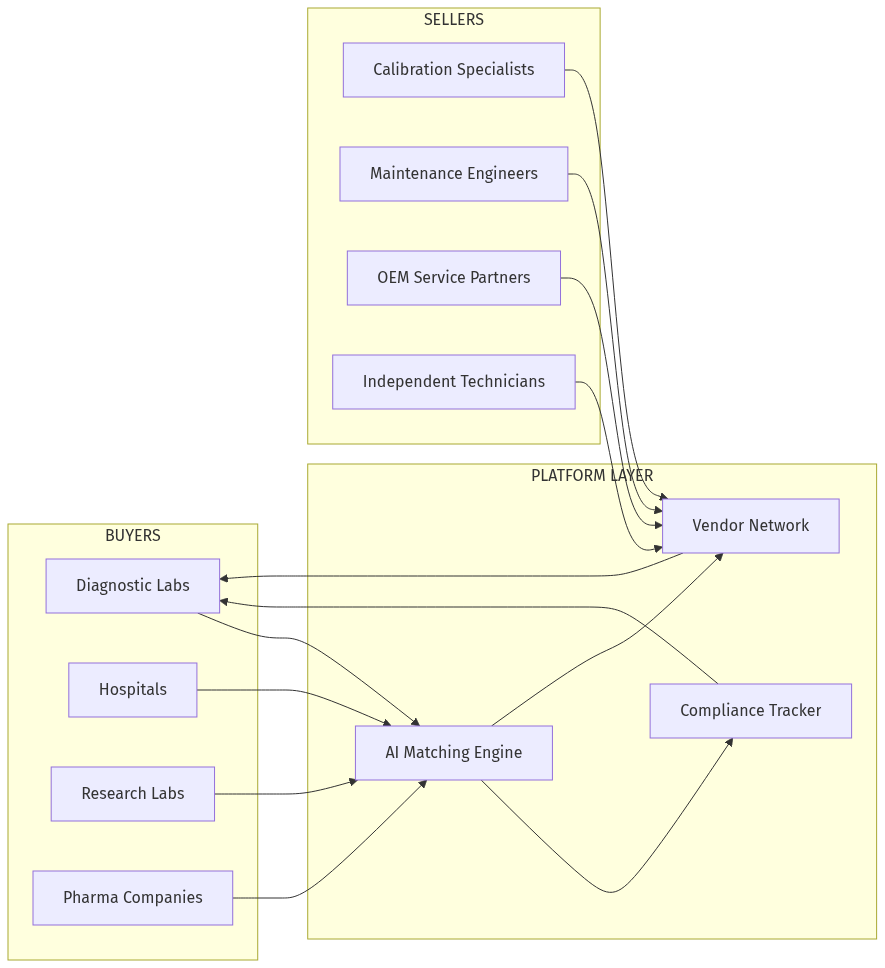
  • The AI Agent Layer

    ┌─────────────────────────────────────────────────────────┐
    │                    USER INTERFACE                        │
    ├─────────────────────────────────────────────────────────┤
    │  Chat: "My Abbott Architect needs calibration"          │
    ├─────────────────────────────────────────────────────────┤
    │                   AGENT ORCHESTRATOR                     │
    ├──────────────┬──────────────┬──────────────────────────┤
    │ Equipment    │ Vendor       │ Compliance               │
    │ Classifier   │ Matcher      │ Tracker                 │
    ├──────────────┴──────────────┴──────────────────────────┤
    │              KNOWLEDGE GRAPH                            │
    │  Equipment ←→ Certifications ←→ Vendors ←→ Track Record  │
    └─────────────────────────────────────────────────────────┘
    Market Structure
    Market Structure

    8.

    Development Plan

    PhaseTimelineDeliverables
    MVP8-10 weeksEquipment upload, vendor directory, basic matching, WhatsApp notifications
    V112-16 weeksAI equipment identification (photo), smart scheduling, compliance dashboard
    V220-24 weeksMulti-vendor coordination, automated certificate generation, predictive alerts
    Scale30+ weeksPan-India coverage, NABL/ISO integration, enterprise features

    MVP Features (Priority Order)

  • Equipment inventory management (manual upload + CSV import)
  • Vendor directory with certification badges
  • Search and filter by equipment type, location, certification
  • Quote request workflow
  • WhatsApp-based communication (India-first approach)
  • Basic compliance calendar
  • V1 Features (AI Enhancement)

  • Photo-based equipment identification using vision AI
  • Auto-matching to certified vendors
  • Smart scheduling suggestions
  • Digital certificate storage and retrieval
  • Automated compliance alerts

  • 9.

    Go-To-Market Strategy

    Phase 1: Build Supply (Vendors)

    Strategy: Recruit calibration vendors first, then use their relationships to find buyers.
  • Identify top 100 calibration providers in Tier 1 cities (Delhi, Mumbai, Bangalore, Chennai, Hyderabad)
  • Cold outreach via phone + WhatsApp — "Join our network to get more clients"
  • Offer free listing with verified badge for first 6 months
  • Onboarding: Get certification documents, service categories, service areas, pricing
  • Phase 2: Acquire Buyers (Labs/Hospitals)

    Strategy: Target mid-sized diagnostic chains first, then expand.
  • NABL-accredited labs — They have the most pain with compliance
  • Regional diagnostic chains — 10-50 locations, need centralized vendor management
  • Hospital groups — Corporate hospitals with multiple facilities
  • Acquisition Channels:
    • LinkedIn outreach to lab owners and biomedical engineers
    • WhatsApp groups for lab professionals
    • Google Ads for "calibration services [city]"
    • Partnerships with lab equipment suppliers

    Phase 3: Network Effects

  • More buyers → More vendors (better coverage)
  • More vendors → Better pricing (competition)
  • More data → Better AI (matching accuracy)

  • 10.

    Revenue Model

    Revenue Streams

    StreamModelPotential
    Commission10-15% on completed servicePrimary revenue
    Subscription$50-500/month for premium featuresDashboard, analytics, priority support
    Listing Fees$20-100/month for vendor premium placementAdditional revenue
    Lead Fees$10-50 per qualified lead to vendorsFor small vendors
    Certification Verification$5-20 per verificationNABL, ISO, OEM certs

    Pricing Economics

    Buyer SegmentAnnual Spend on CalibrationPotential Commission
    Small diagnostic lab (1-5 locations)$5,000-20,000$500-3,000
    Mid-size chain (5-20 locations)$20,000-100,000$2,000-15,000
    Large hospital (20+ locations)$100,000-500,000$10,000-75,000
    ---
    11.

    Data Moat Potential

    Proprietary Data Assets

  • Equipment Registry — Map of all lab equipment in India with specs, calibration history
  • Certification Database — Unified view of vendor certifications across NABL, ISO, OEM
  • Pricing Insights — Real-time calibration pricing by equipment type, location, complexity
  • Compliance Records — Historical calibration data for audit and verification
  • Competitive Moat

    • Network effects: More vendors = better buyer experience = more buyers = more vendors
    • Data moat: Historical compliance data becomes more valuable over time
    • Trust accumulation: Verified completion records build credibility

    12.

    Why This Fits AIM Ecosystem

    Vertical Integration with AIM.in

    This platform could become a key vertical under AIM.in's B2B marketplace strategy:

  • For buyers: "Need lab equipment?" → "Need lab maintenance?" (cross-sell)
  • For vendors: "Sell lab supplies?" → "Offer calibration services?" (supply expansion)
  • Data synergy: Equipment inventory data useful for both procurement and maintenance
  • Similar Patterns from Existing Articles

    • Spare parts sourcing (previous article): Similar marketplace dynamics, vendor matching
    • RFQ automation (previous article): B2B procurement workflow expertise
    • Supplier risk intelligence (previous article): Compliance and verification capabilities

    Indian Market Timing

    • Diagnostic market growth = demand for supporting services
    • Regulatory tightening = need for compliance solutions
    • Digital adoption in healthcare = readiness for online marketplace

    ## Verdict

    Opportunity Score: 8.5/10

    This is a high-potential B2B marketplace with strong AI applicability, clear pain points, and regulatory tailwinds.

    Strengths

    • Clear pain point with measurable time savings
    • Recurring revenue model (annual calibration)
    • Strong network effects potential
    • Regulatory tailwinds (NABL, NABH requirements)
    • India-first approach (largest diagnostic market)

    Risks

    • Vendor quality verification challenges
    • Complex certification landscape
    • Trust-building in healthcare is slow
    • OEM resistance to third-party calibration

    Why Incumbents Will Struggle

    • Large players (Thermo Fisher, Sartorius) focus on enterprise, ignore SMB
    • Local vendors have no digital capabilities
    • No existing platform addresses this specific need

    Recommended Next Steps

  • Build vendor directory in 2-3 cities
  • Pilot with 10-20 mid-sized diagnostic chains
  • Validate AI matching with real equipment data
  • Iterate on compliance tracking features

  • ## Sources